
The History of Mental Health Awareness Month in Memphis
- Alliance Healthcare Services

- May 1
- 4 min read

In 1955, a Memphian in a mental health crisis had essentially one road to travel.
It was Highway 64, eastbound, sixty miles to a state hospital in Bolivar, Tennessee.
A sheriff drove. A family member sometimes followed.
The patient often did not come back for years.
In April 2026, a Memphian in crisis can walk into a building on Broad Avenue. They see a clinician within hours. They often go home in 3-5 days.
The 71 years between those two moments are the entire story of Mental Health Awareness Month.
The Memphis part of it is why Alliance Healthcare Services exists at all.
The patient who started it all

In 1900, a 24-year-old Yale graduate named Clifford Whittingham Beers attempted suicide.
He survived, and over the next three years he was committed to three different mental institutions. He was beaten. He was restrained. He watched other patients suffer the same.
When he got out, he wrote about it.
His 1908 book, A Mind That Found Itself, became a bestseller.
On May 6, 1908, a small group met at his New Haven home and formed the Connecticut Society for Mental Hygiene, the first organized mental health advocacy group in America.
The month was May. That detail matters.
From a book to a committee in Connecticut

The next year, Beers, philosopher William James, and psychiatrist Adolf Meyer founded the National Committee for Mental Hygiene. That organization eventually became Mental Health America.
In 1913, Beers opened the Clifford Beers Clinic in New Haven, the first community-based outpatient mental health clinic in the United States.

It is the model we would inherit, six decades later, in a basement in Memphis.
In 1949, the National Association for Mental Health declared the first Mental Health Week, in May.
By the 1990s, a presidential proclamation had expanded it to the full month.
That is why May matters. Not because someone picked it. Because the movement itself was born in May.
The law that built Alliance

On February 6, 1963, John F. Kennedy delivered the only presidential message to Congress in American history dedicated entirely to mental illness and intellectual disability.
His sister Rosemary had been lobotomized at 23.
He pledged to cut the institutionalized population in half.
Eight months later, on October 31, 1963, he signed the Community Mental Health Act, his last major piece of legislation. He was assassinated 23 days later.
The Act funded community mental health centers as alternatives to state hospitals.
Between 1965 and 1975, the state hospital population in America fell by 59.3 percent. The community-based model that Beers had drawn up in 1913 finally had federal scaffolding under it.

Ten years after Kennedy signed that law, in 1973, we opened our doors in the basement of the Memphis Mental Health Institute building at Poplar and Dunlap.
Our name then was Southeast Memphis Mental Health Center.
Our work was the work the institutions could not do: care for people in their own community, close to their own families.
Meanwhile, sixty miles east

Through all of this, Western State Mental Hospital was still running in Bolivar.
It had opened in 1889. At its peak, it warehoused more than 2,000 patients.
Treatments included hydrotherapy, insulin shock, lobotomy, and Metrazol-induced seizures. The average patient saw a psychiatrist for ten minutes per week. Many were buried in unmarked graves on the campus.
For most of the 20th century, this was the default destination for a Memphian whose mental illness could not be managed at home.
It was not a hospital so much as a place where a person could disappear from public life. Whole families lost contact with whole members. Some never came back.
This is what we exist against. It is the reason a community-based system had to be built at all.
From Bolivar to Broad Avenue
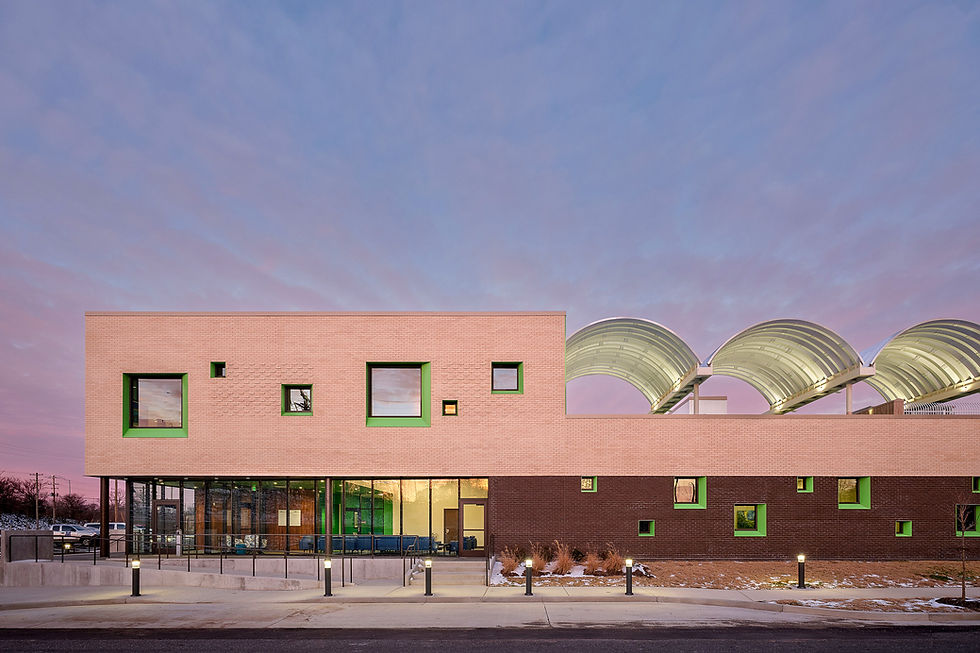
In March 2025, we opened the Crisis Wellness Center at 3200 Broad Avenue. Thirty crisis stabilization beds. Fifteen medically supervised detox beds. An on-site pharmacy. A clinician in the room within hours of walking through the door, and most people home in their own bed the same night.
Our Mobile Crisis teams responded to more than 3,000 on-site emergencies in 2024 alone. Our pre-arrest diversion program, which routes people in crisis to care instead of jail, saves Shelby County an estimated $20 million a year in jail, court, and hospital costs.
A Memphian in crisis in 2026 has options that did not exist for a Memphian in crisis in 1955.
You no longer need a trip to Bolivar. There's now a door on Broad Avenue.
That is the arc of Mental Health Awareness Month, compressed into Memphis geography.
And now, for the children of Memphis & Shelby County
This summer, the arc extends to our youngest neighbors.
On June 1, 2026, our Children & Youth Wellness Center opens for full operations at 602 Malcomb Street. It is the first crisis stabilization facility in the region built specifically for ages 4 to 17, with 15 beds designed around children and the families who love them.
For the first time in our 50-plus year history, Memphis children in crisis will not have to be treated in a building designed for adults.
Why May still matters
Mental Health America's 2026 theme is More Good Days, Together. Every reform on this timeline, from a New Haven living room in 1908 to a building on Broad Avenue in 2026, exists for the same reason: to make more good days possible for more people.
If you or someone you love is in crisis, call our line at (901) 369-1410 or 988 anytime, day or night. We will pick up.


Comments